‘Arvand Martyrs Bridge is just beginning of a larger development path’
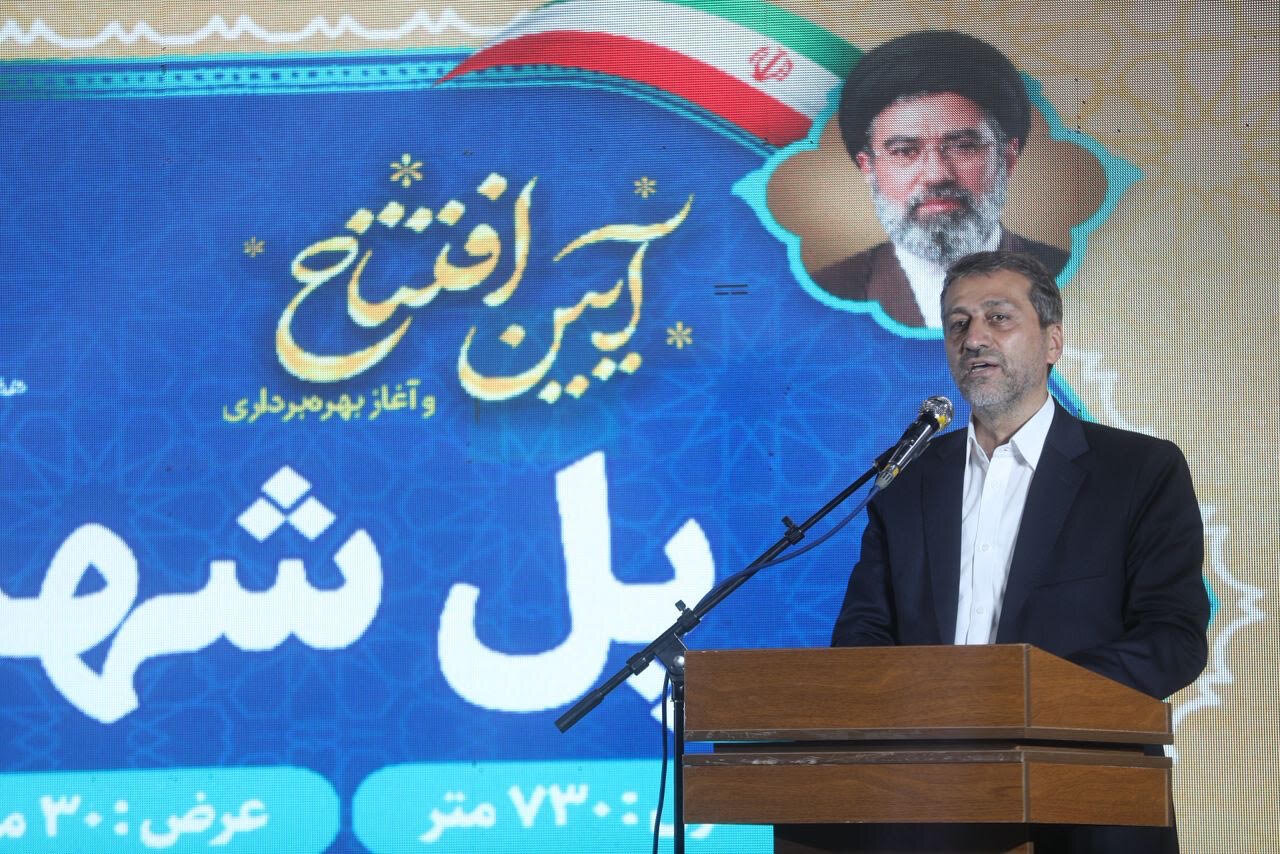
TEHRAN- The Secretary of the Supreme Council of Free Trade and Special Economic Zones, emphasizing the need to continue the development process in the Arvand Free Zone, stated that the inauguration of the Arvand Martyrs Bridge is not the end of a construction project, but rather the beginning of a larger path for implementing infrastructural, economic, and developmental projects in Abadan, Khorramshahr, and the Arvand Free Zone.
Hossein Forouzan, speaking at the official inauguration ceremony of the Arvand Martyrs Bridge mega-project, said: "The people of Abadan, Khorramshahr, and the Arvand region paid a heavy price during the eight years of the Sacred Defense [Iran-Iraq War] in defending the country. Today, it is the duty of officials to use all their capacity to compensate for part of this sacrifice and to strive for the development and prosperity of this region."
Forouzan, referring to his history of presence in Khuzestan and Khorramshahr, added: "My first presence in this region dates back to 1982, and being in a land where the sacred bodies of great martyrs such as Mehdi and Hamid Bakeri rest has always been an honor for me and a reminder of the heavy responsibility I bear toward the people and the martyrs."
Referring to the importance of inaugurating the Arvand Martyrs Bridge, he emphasized: "This project can resolve some of the problems faced by the people of the region, but it should not be seen as the end point of development efforts. Rather, this bridge should serve as a precursor to the implementation of a series of major infrastructural, economic, and developmental projects in Abadan, Khorramshahr, and the Arvand Free Zone."
The Secretary of the Supreme Council of Free Trade and Special Economic Zones continued: "The right of the people of this land upon officials goes far beyond the implementation of a single construction project. We must strive to make maximum use of the region's existing capacities to create welfare, employment, economic prosperity, and sustainable development."
Forouzan, referring to the meetings and reviews conducted in recent days in the Arvand Free Zone, said: "During my recent multi-day visit, a series of important priority projects for Abadan and Khorramshahr were identified, and plans have been made for their implementation. It is expected that a significant portion of these projects will reach the operational stage in the coming year."
Expressing appreciation for the performance of Mostafa Khanzadi, the CEO of the Arvand Free Zone Organization, he stated: "In recent days, numerous meetings have been held with the CEO and the management team of the organization. The prevailing approach of this team is a serious move toward development and gaining the satisfaction of the people."
The Secretary of the Supreme Council added: "Serving the people and striving to solve their problems must be the top priority of the region's management. We believe that the people's satisfaction paves the way for God's satisfaction."
Forouzan also pointed to the industrial capacities of the Arvand Free Zone and said: "Significant actions are also underway in the industrial sector. Some industrial projects currently being implemented could have considerable impacts on the region's economy and even the national economy in the future."
He emphasized: "Activating the region's industrial, economic, and investment capacities requires continued support and coordination among various agencies. All available capacities must be used to accelerate the development process."
The Secretary of the Supreme Council of Free and Special Economic Zones noted: "The success of the Arvand Free Zone Organization in implementing development programs requires the cooperation and support of the Governor of Khuzestan, representatives in the Islamic Consultative Assembly, and other executive bodies."
Forouzan added: "Coordination among various entities can speed up the implementation of infrastructural and economic projects and pave the way for achieving the region's development goals."
He also referred to the message from the Minister of Economic Affairs and Finance and the President for the people of the region, saying: "I conveyed the greetings and message of the President and the Minister of Economic Affairs and Finance to the noble people of Abadan, Khorramshahr, and the Arvand Free Zone, and emphasized their special attention to this region and their support for its development process."
The Secretary of the Supreme Council of Free and Special Economic Zones, emphasizing the historical standing of Abadan and Khorramshahr in contemporary Iranian history, said: "The people of this region deserve to enjoy the best infrastructure, facilities, and development opportunities."
Forouzan concluded: "The Secretariat of the Supreme Council of Free Zones will stand alongside the Arvand Free Zone Organization with all its capacity to ensure that the path of development and prosperity for Abadan, Khorramshahr, and this region is pursued with greater speed and seriousness."
The Secretary of the Supreme Council of Free Trade and Special Economic Zones, during his visit to the Arvand Free Zone, toured the Shalamcheh commercial terminal and its infrastructure.
Hossein Forouzan, leading a delegation from the Secretariat, visited various sections of the Shalamcheh commercial terminal, including its cargo yard and commercial and logistical infrastructure. He closely examined the capacities, issues, and operational processes of this terminal.
During the visit, the existing capacities of the Shalamcheh commercial terminal, cargo loading and unloading processes, support infrastructure for export activities, and the provision of services to economic activists and traders were reviewed.
The Shalamcheh commercial terminal, as one of the key commercial infrastructures of the Arvand Free Zone, plays an effective role in Iran-Iraq economic exchanges. Developing its infrastructure could increase export capacity, facilitate the movement of transport fleets, and improve logistical services at this international border crossing.
The 100-hectare cargo loading and unloading yard in Shalamcheh is also among the infrastructures established in this area, providing suitable capacity to support commercial and logistical activities at the Shalamcheh border.
Additionally, given Shalamcheh's commercial capacities and its position in developing trade with Iraq, removing implementation obstacles, strengthening logistical infrastructure, and increasing the terminal's productivity are among the key priorities in the path of developing economic activities in the Arvand Free Zone. Previously, the allocation of import codes to Shalamcheh port had also made it possible to import and clear goods through this route.
During the visit, Forouzan conducted a field review of the capacities and existing issues and was briefed on the latest status of the Shalamcheh commercial terminal's infrastructure and the progress of economic activities at this border crossing.
The CEO and a number of managers from the Arvand Free Zone Organization, along with officials related to the Shalamcheh commercial terminal, were also present during this visit.
The Arvand Free Trade-Industrial Zone is one of Iran's most strategically significant economic hubs, located in the southwestern Khuzestan province at the confluence of the Karun and Arvand rivers. Spanning over 37,000 hectares, it encompasses the cities of Abadan, Khorramshahr, and Minoo Island, sharing borders with Iraq and Kuwait.
The zone serves as a vital gateway for international trade, offering multi-modal transport advantages through the Abadan International Airport, Khorramshahr's second-largest container port, and the Shalamcheh border terminal – a key crossing for commercial activities with Iraq. Its logistics capacities are being further developed with a 700-hectare "Logistics Park" project.
MA
Leave a Comment